

In industrial piping systems, elbows are essential components used to change the direction of fluid flow. Among them, the most commonly used types are 90 degree elbows and 45 degree elbows.
Understanding the differences between these two fittings is important for engineers, procurement specialists, and project managers when selecting the right solution for pipeline systems.
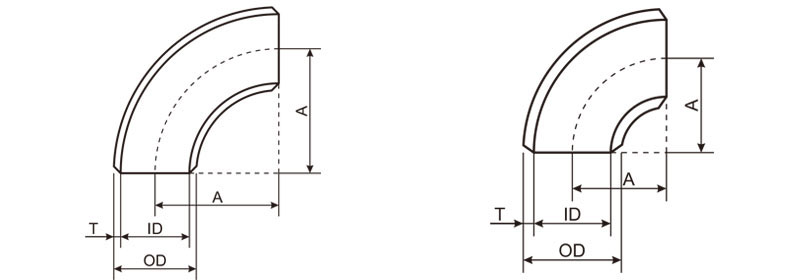
A 90 degree elbow is a pipe fitting designed to change the direction of flow by 90 degrees. It is widely used in systems where a sharp directional change is required.
For example, in oil and gas pipelines, 90 degree elbows are often installed to redirect flow between vertical and horizontal sections. Detailed specifications, dimensions, and material options can be found on Senrui’s product page:
https://www.senruipipe.com/products/asme-b16-9-90-degree-lr-elbow
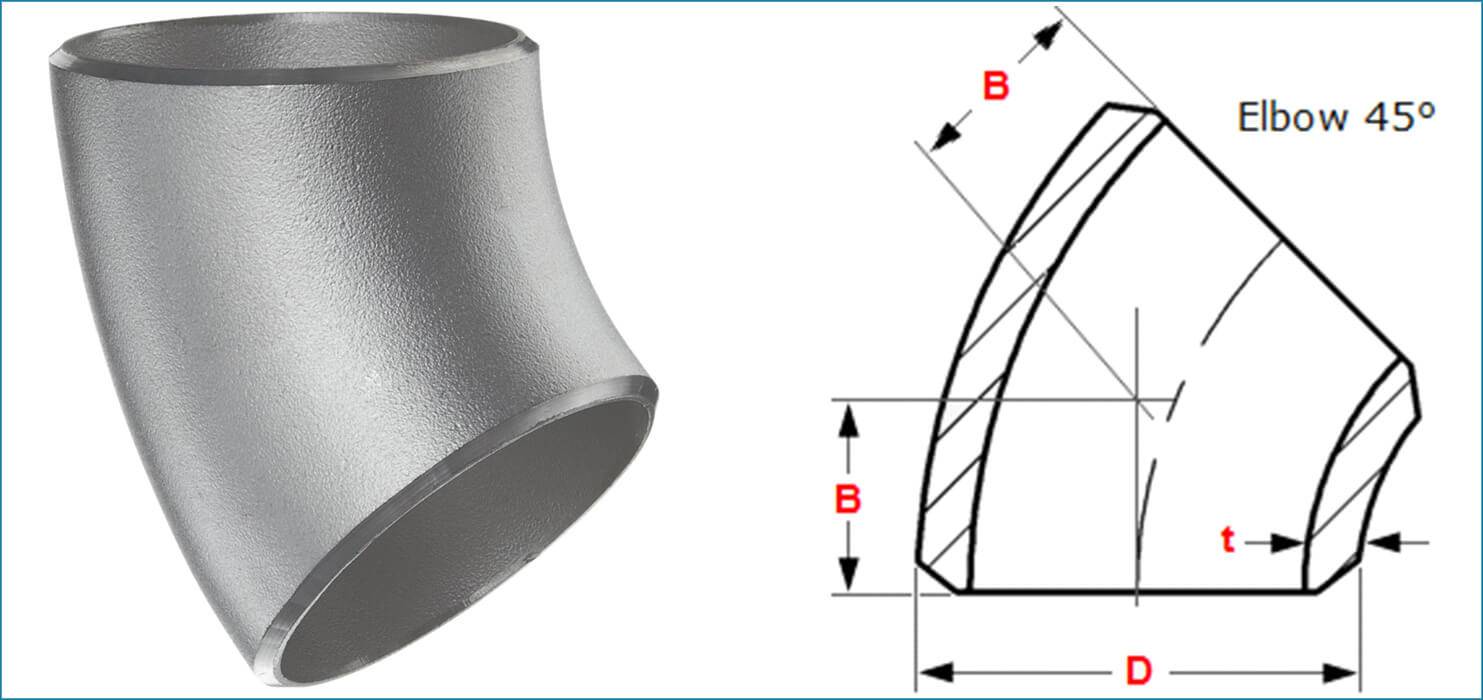
A 45 degree elbow changes the direction of flow by 45 degrees. Compared with a 90 degree elbow, it provides a smoother transition and reduces turbulence within the pipeline.
This type of elbow is commonly used in systems where maintaining flow efficiency is important, such as water treatment and chemical processing pipelines.
Feature | 90 Degree Elbow | 45 Degree Elbow
Flow Direction | Sharp change | Smooth change
Pressure Loss | Higher | Lower
Application | Main pipeline turns | Gradual direction changes
Installation | Common in tight layouts | Used in flexible routing
One of the most important differences between 90 degree and 45 degree elbows is their impact on pressure loss.
A 90 degree elbow creates more resistance due to the sharper turn, which can result in higher pressure drop. On the other hand, a 45 degree elbow allows smoother flow, reducing energy loss in the system.
For high-pressure systems, engineers often prefer long radius elbows to minimize flow resistance and improve efficiency.
Both types of elbows are widely used across multiple industries:
Oil and gas industry – pipeline routing and directional changes
Petrochemical plants – process piping systems
Power plants – high-temperature pipelines
Water treatment – fluid transportation systems
The choice between 90 degree and 45 degree elbows depends on system design, available space, and performance requirements.
When selecting between a 90 degree elbow and a 45 degree elbow, consider the following factors:
In most cases, 90 degree elbows are used for major directional changes, while 45 degree elbows are used to reduce turbulence and improve flow performance.
For projects requiring strict standards and reliable supply, many buyers prefer sourcing from experienced manufacturers with proven export capability, such as Senrui, which offers a full range of ASME B16.9 elbows.
Pipe elbows are manufactured in a wide range of materials, including:
Carbon steel (ASTM A234 WPB)
Stainless steel (ASTM A403 WP304 / WP316)
Alloy steel (ASTM A234 WP11 / WP22)
Duplex steel (ASTM A815 S31803 / S32750)
The most commonly used standard for butt weld elbows is ASME B16.9, which defines dimensions, tolerances, and manufacturing requirements.
Both 90 degree elbows and 45 degree elbows play important roles in pipeline systems. The selection depends on the required flow direction, pressure conditions, and installation constraints.
For detailed product specifications, sizing charts, and pricing information, you can visit:
https://www.senruipipe.com/products/asme-b16-9-90-degree-lr-elbow
Understanding their differences helps improve system performance, reduce maintenance costs, and ensure long-term reliability.


